When I first started sewing, my Mount Everest was to make a winter coat. I live in a very cold city. It’s between -10 or -20 most winter days, but can get to -30C regularly (sometimes -40C), and so a lot of pretty, retro styles sold now are impractical. Sewing clothing that fits my climate has always been a real and major consideration for the clothing when I embark on a project.
I chose the Princess Coat by Charm Patterns, which had recommendations for using thinsulate and a fleece lining in the instructions. I bought these from the Fabric Club.
I had a couple of major concerns which boiled down to the worry that the thinsulate would be too bulky for a tailored, Lilli Ann inspired princess coat. So, I did a few things to account for this with this. The first was to buy a lighter thinsulate (100g) because it was already graded to -20. With the wool, and the kasha lining, it would be warm enough for most days of winter here without too much bulk. The second was grading all of the seams as much as possible. The third was over engineering the bodice to get it as smooth as possible by using some tailoring methods.
Construction
I don’t have many photos of this step, but I basted the kasha lining to the thinsulate, and sewed that as though it was the lining garment. I called it my ‘spacesuit’.
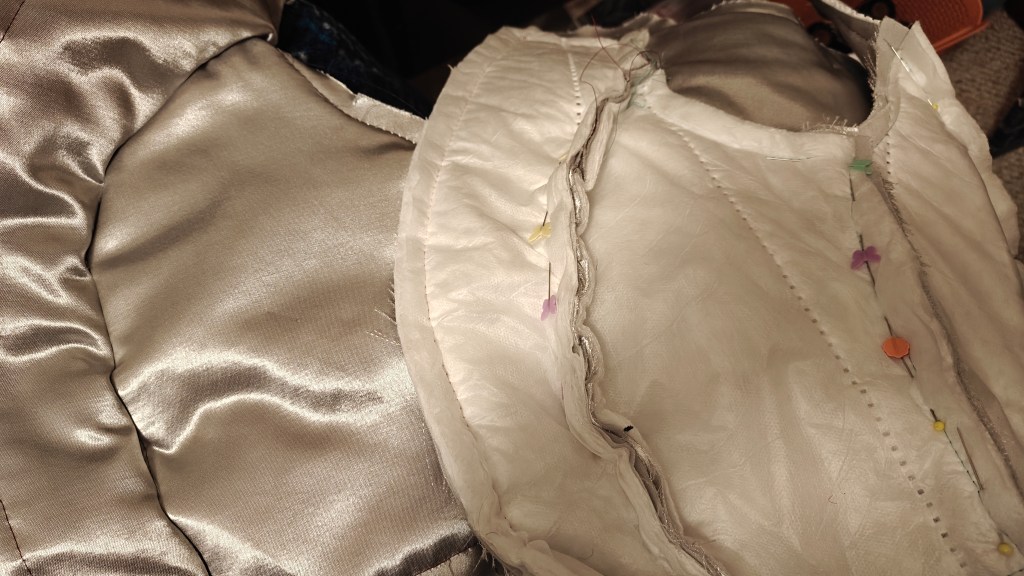
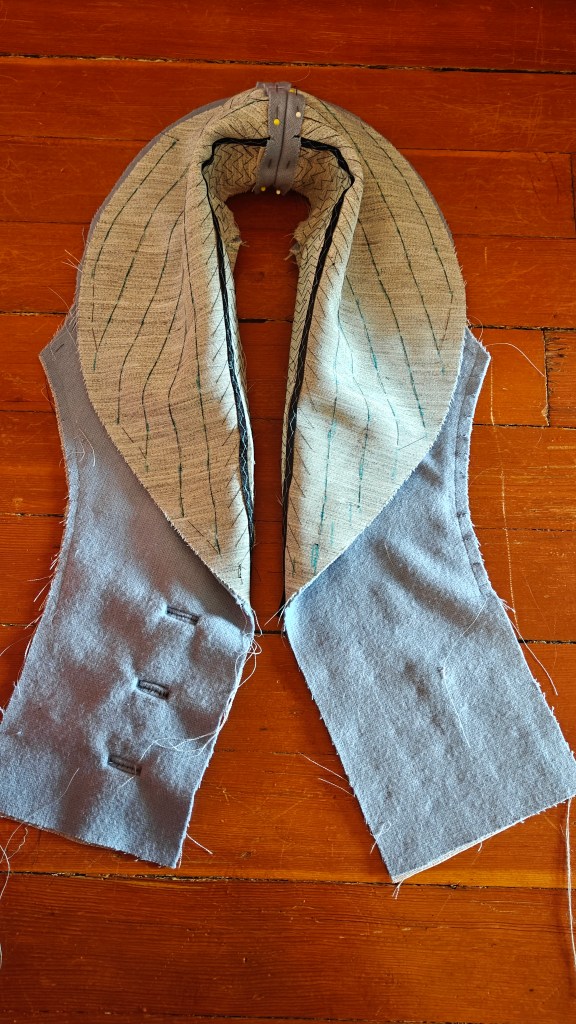
The main wool fabric was sewn based on the pattern, with horsehair canvas for the interfacing. I used Gertie’s previous blog posts here for some tips on how to do this step. I did a lazy form of padstitching, with quite large stitches, mainly to attach the interfacing to the fabric. It worked, so I would say it was a success.
I added shoulder pads because I have pretty sloped shoulders, which otherwise would look funky in on a coat like this. I also added twill tape as a reinforcement for the shoulder seams because of how heavy it is.
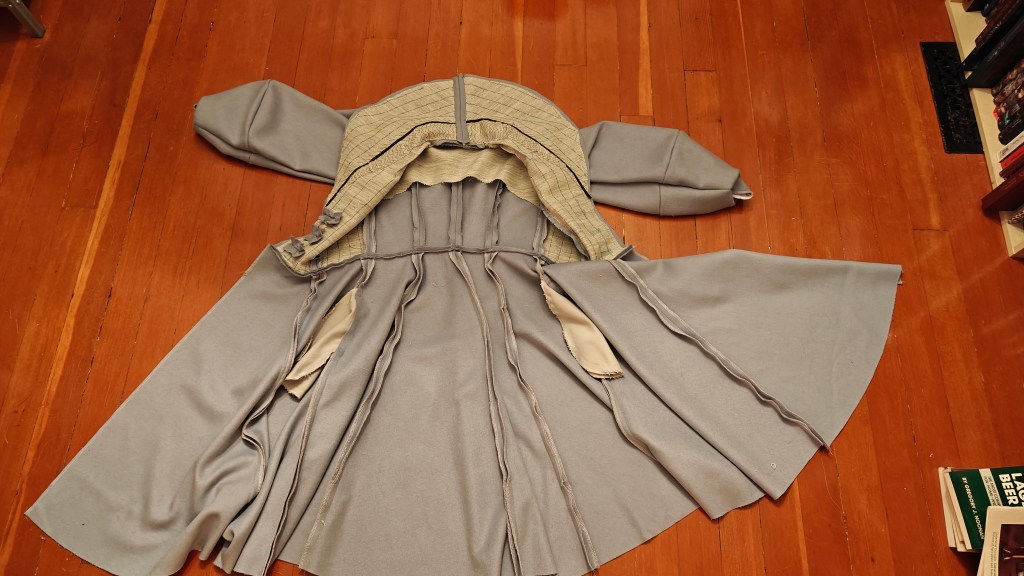
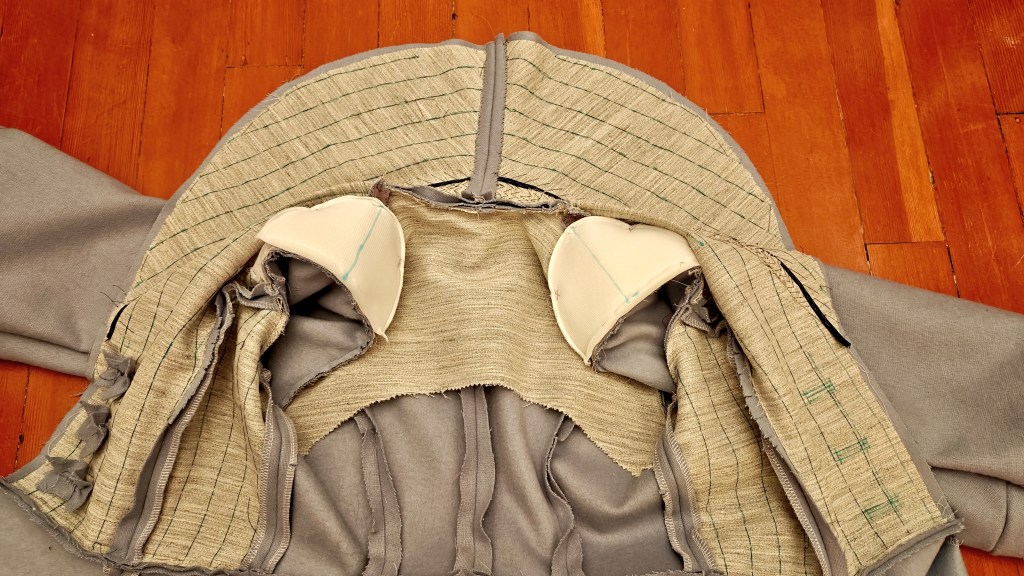
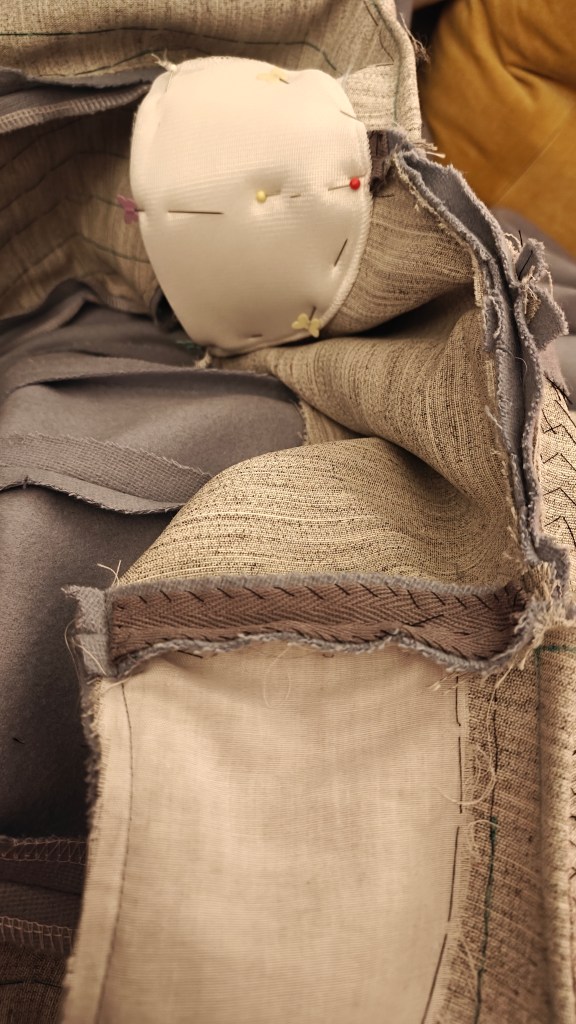
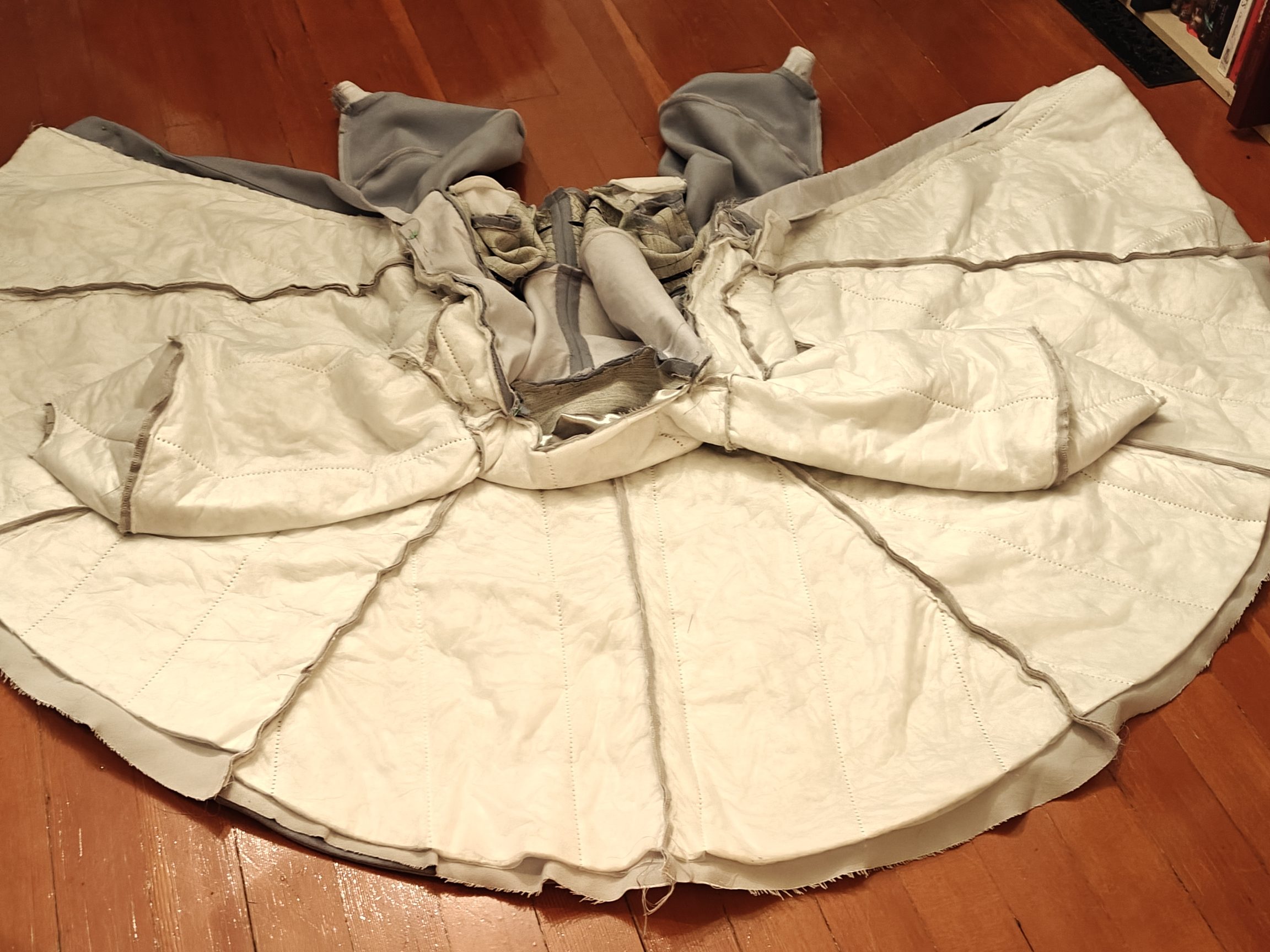
I have been asked by other sewists if everything was lined with thinsulate, and the answer is yes! Everything: sleeves, bodice, and skirt pieces. I was very worried about cracks where the cold would get in, so I insulated as much as I possibly could. Any chill, up or down any part of the coat, would be instantly felt. The shoulders are the puffiest part, and likely change the silhouette a bit, but in this case I had to choose function over form.
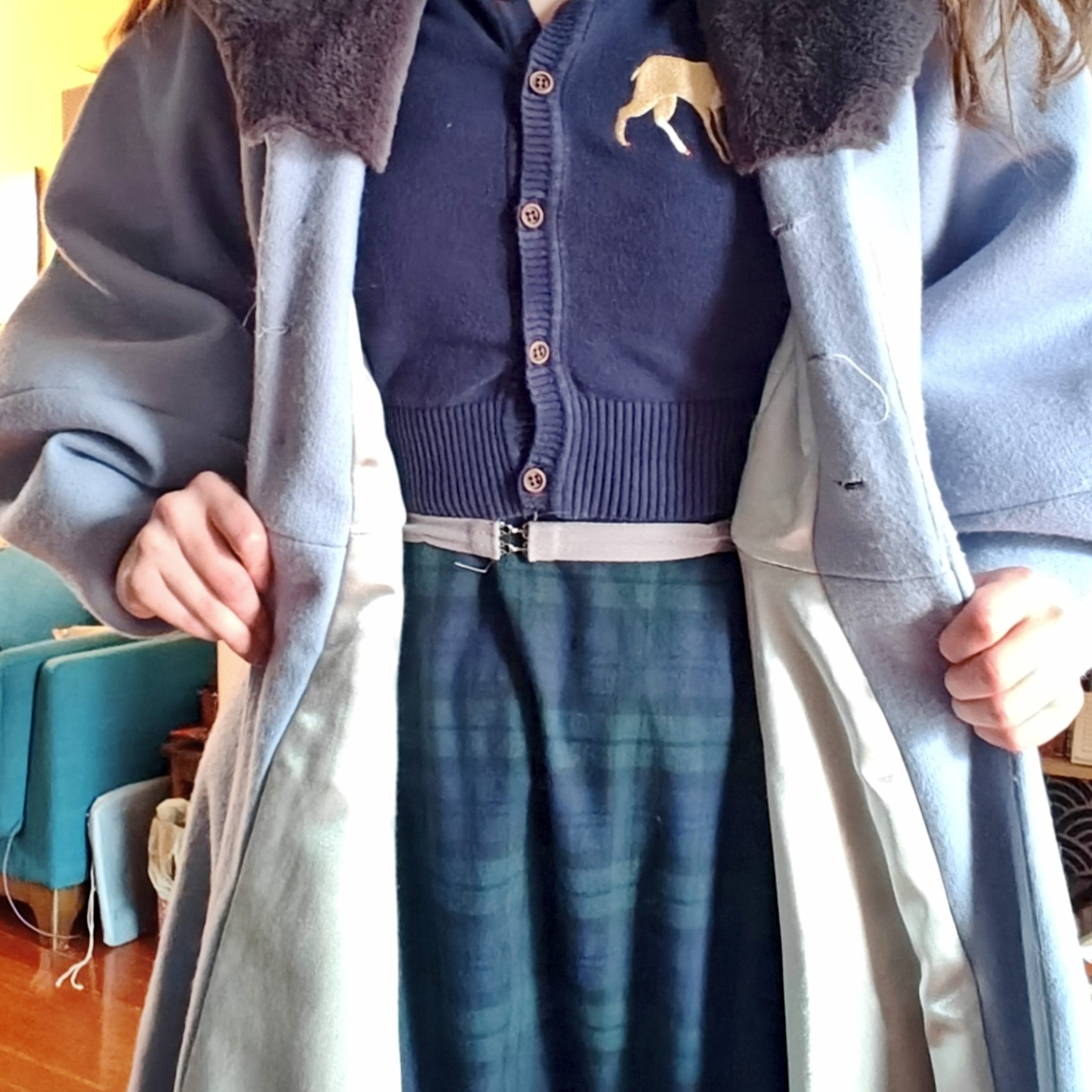
I added a waist stay/tape because I was so worried about the weight of this coat stretching the bodice (it ended up weighing about 7lbs). Twill tape was tacked at the waist seam and then hooks and eyes were added to the ends for a closure.
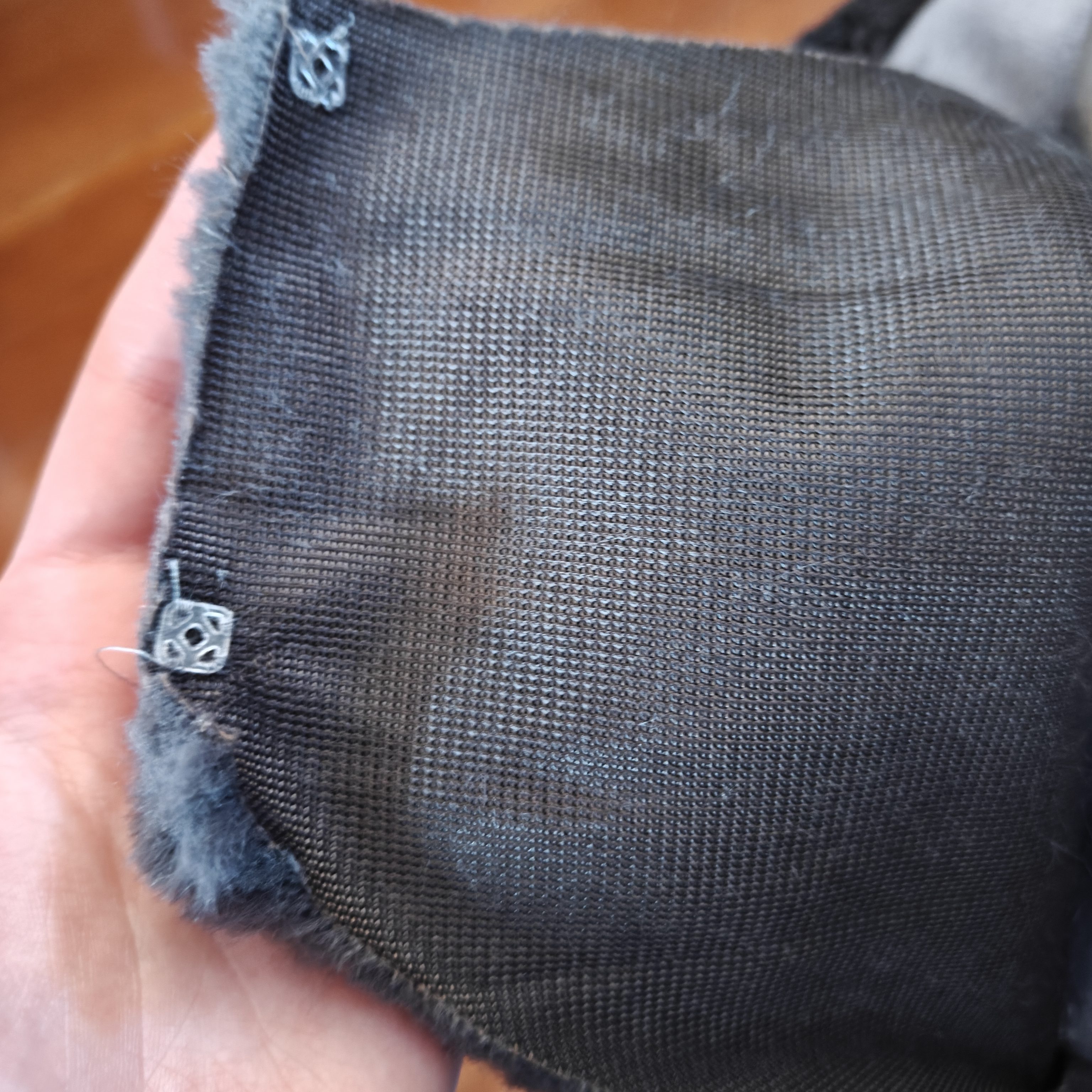
I also attached the faux fur collar overtop the wool, rather than sewing it into the coat. That way it is removable with small plastic snaps. The coat itself is likely dryclean only, but I know from experience that fur can accumulate a lot of dust and grime, especially around the face, so I wanted to make sure it could be washed.
Specs
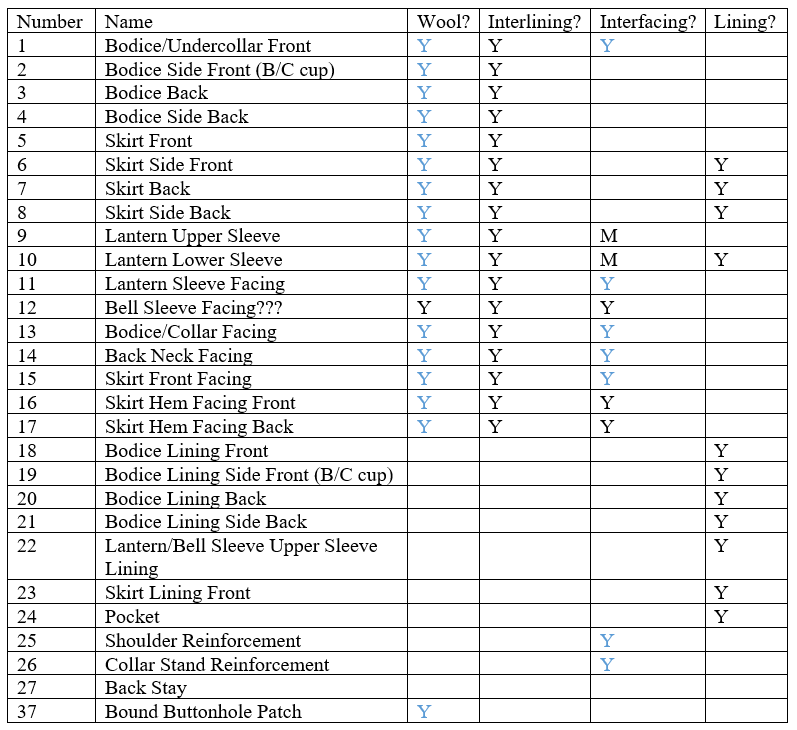
I spent about 50 hours on it. This was partially due to how many pattern pieces there were (like 52???), which needed to be cut out of three different fabrics, with different variations. Here is an actual table I used to keep track of the pieces I was cutting out. And I was an absolute beginner with some of these techniques, such as tailoring and coat construction.
I used all 5 or so meters required by the pattern, and about 3.5 meters of thinsulate and kasha lining each. So the coat cost about $350 to make but taking into account labour hours, is worth $1-2000 which is about what Lili Ann coats are worth now.
Since I was replacing an old winter coat it was honestly worth it.
Final thoughts
I still have some ongoing adjustments I’m making to this coat, but I think that’s pretty common with any large project like this. I recently had to redo a part of the center front seam because the skirt was curling inwards. I’m also adding snaps down the front to close it, because I’m finding that it’s opening as I walk.
The only real frustration I have is that the sleeves could be a bit longer, and I think they need to some sort of ribbed cuff to keep out the cold. But I’m working on gloves to fix this, and I have made a muff, so honestly it’s not that bad!
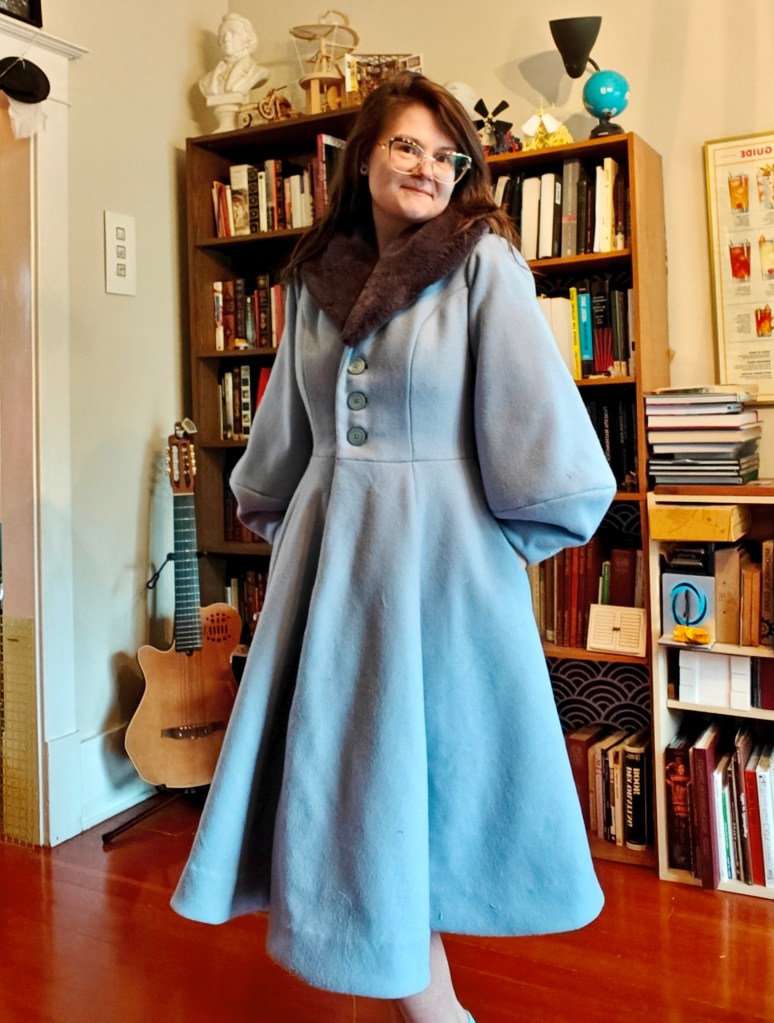
I’m quite proud of it! I’ll usually get a couple compliments a day on the coat when I’m out and about. It’s not nearly as puffy as I was worried about. And it’s definitely warm enough for at least -30 (I tested it!).
 Ruby Prinsen
Leave a comment